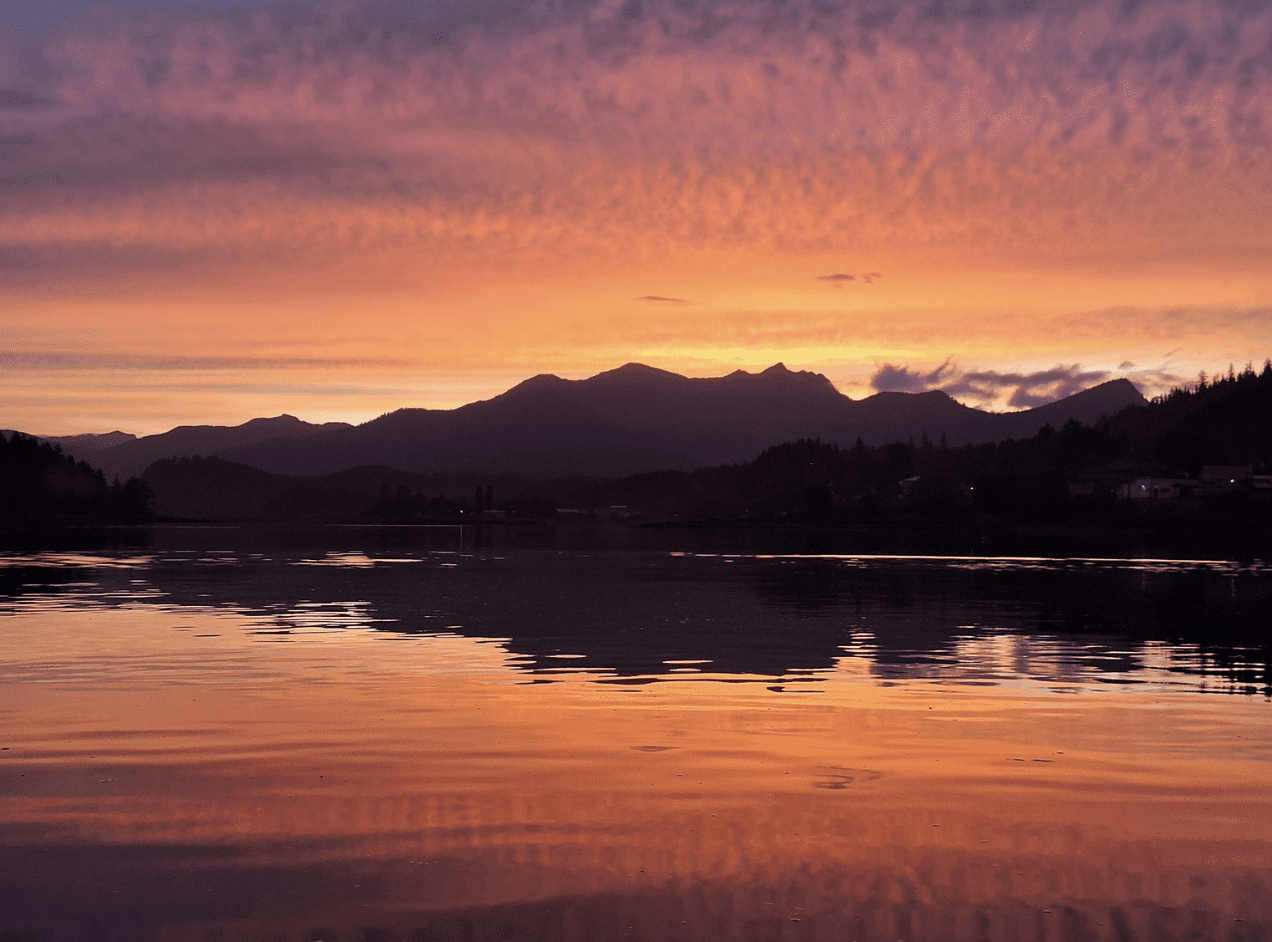
I watched a beautiful sunset in Daajing Giids the other day. As the bright red and orange softened, the pink and purple clouds faded into lavender grey. I saw the indigo hue of the mountains and islands deepen until they melded with the shadow of the evening sky. Between the wispy clouds that began to drift toward the mainland, I saw the stars twinkle at summer’s end.
There is always so much to see in the sky, and as the seasons slowly turn and the constellations shift ever so slightly west, more is revealed on the eastern horizon. It’s a subtle shift in the movement of the heavens, a steady, almost imperceptible change, but one that becomes increasingly clear as the weeks go by.
The trifecta of Lyra, Cygnus and Aquila hang in the south, slowly drifting west and bearing some of the first stars we see after sunset. The Summer Triangle is named for its appearance in the summer months, but it remains visible well into autumn and the beginning of winter. Lyra, and the bright star Vega, are slowly beginning to dip from the highest point in our sky (the zenith) closer to the horizon in the west.
Looking to the east, we can see the planet Saturn shining bright beneath a fish of Pisces. The planet, named after a Roman god of agriculture, time, abundance and wealth, continues its slow advance across the sky. It takes approximately 28.5 Earth years for Saturn to orbit the sun.
Saturn has a warm light that appears to be a yellow-golden-orange hue. It does not twinkle or scintillate like the stars around it, as it shines steadily through the night. Since Saturn is the furthest planet we can see with our naked eye, it is not as bright in magnitude as Jupiter or Venus. Yet with a keen eye, one can spot this planet and track it through the sky.
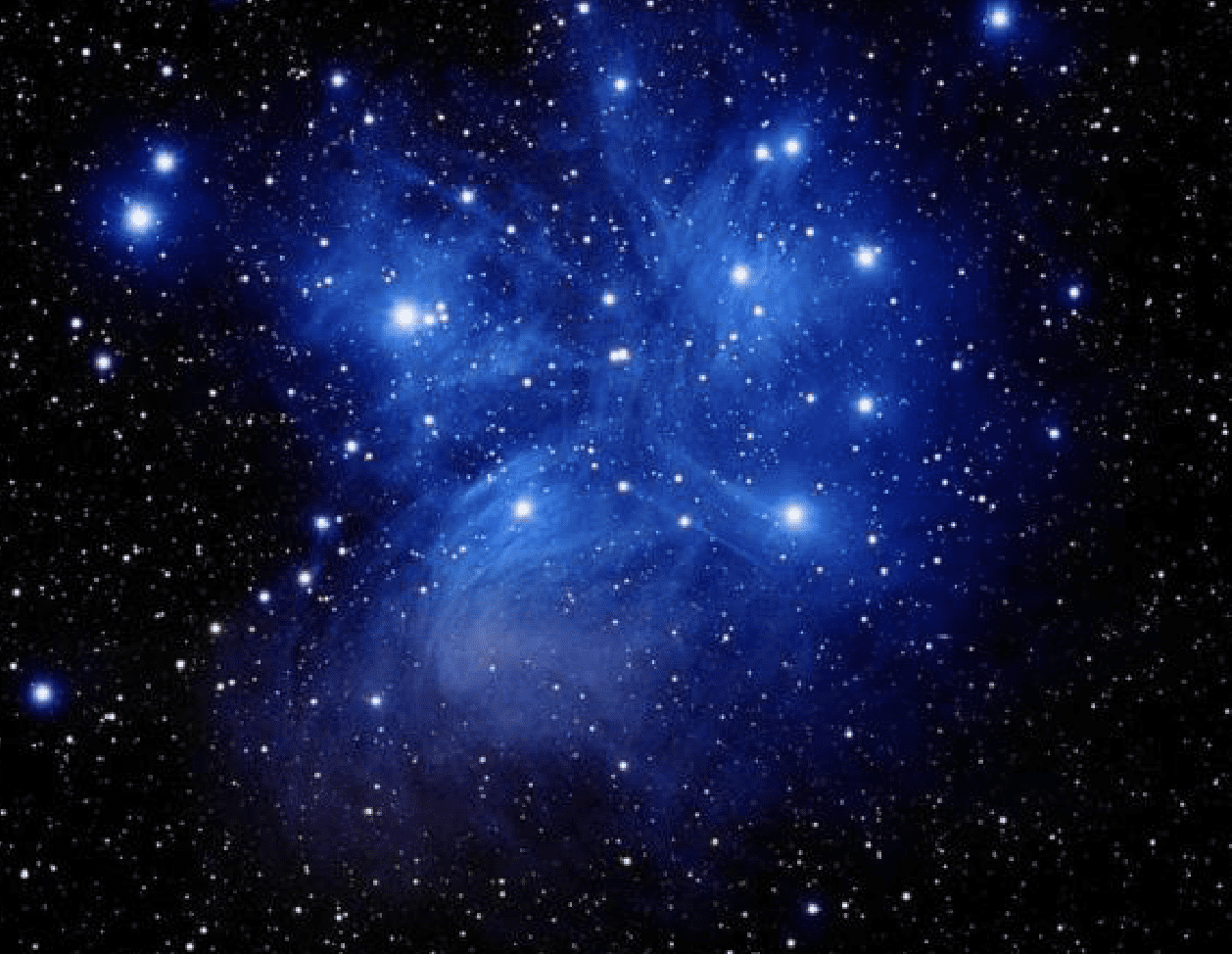
Continuing east around the horizon, you can see the star cluster of Pleiades glowing. The circle of time has brought this iconic star cluster back into view, and we may gaze upon it on autumn nights with increasing ease. Technically, this is an asterism within the constellation of Taurus.
The Greek name “Pleiades” is typically pronounced with three syllables, “plei-a-des.” This name is pronounced many different ways across the globe. I most often hear a combination of “plee-a-dees,” “play-ay-dees” or “ply-uh-deez,” or some combination therein. This cluster of stars is also known as Messier Object 45, or M45. It is actually a group of approximately 1,000 stars that are loosely held together by gravity.
There are many more names for this asterism, as it has been observed all over the world and talked about for millennia. In the Māori language, it is known as Matariki, and in Japanese, it is known as Subaru. Yes, your car may be named after this constellation.
They are often called the Seven Sisters, after a Greek myth of seven nymphs who were placed in the heavens. Six or seven bright stars outshine the rest, though skilled eyes on dark nights can pick out even more. Many myths from around the world tell a story about seven sisters being chased.
The appearance and disappearance of this asterism often coincide with different growing seasons across the globe. For us, its rising in our autumn night skies is indicative of harvest and the end of the main agricultural growing season.
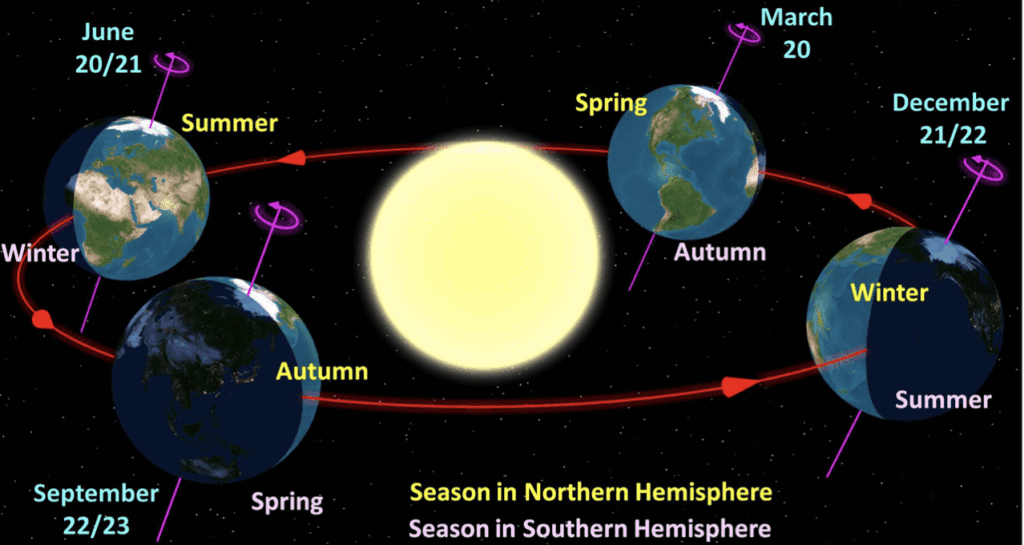
By the time this article is published here on Haida Gwaii, the autumnal equinox will have occurred. While this symbolically marks the end of summer and the beginning of the autumn season, it is a date precisely chosen to mark an occasion. It marks the point in time when the sun is exactly between the longest and shortest days of the year. Equinox means “equal night.”
We all know summer is bright and warm, and winter is dark and cold. This is because in the northern hemisphere we are tilted toward the sun in the summer and have warmer, longer days. In the winter, we are tilted away from the sun and receive less light and less warmth.
The Earth’s tilt at 23.5 degrees, and the travel of approximately 470 million kilometres through space, has brought us from the spring equinox on March 22, 2025, to the autumn equinox on September 22, 2025. As each and every one of us on this giant rock hurtled 470 million kilometres through space, six months passed.
The flowers grew in spring and the berries ripened on the bush, then the fruit on the trees. Now the fish are in the river and the mushrooms in the forest, and the rains begin to fall again. We travelled halfway around the sun. We travel through space every day. Each year, we do a full lap of the bright star that gives us light and life.
I really try to slow down around this time of the year and look around at all the changes that have occurred. I find gratitude in my heart for all that is provided from the combination of the light of the sun and the Earth herself. As the autumn leaves fall, I try to let my sorrow fall too. Let it join the leaves and be stirred by winds and rains and washed away.
The great thing about long, dark evenings, nights and mornings is that the stars are pretty phenomenal. The cold, crystal air that makes us shiver makes the stars shine brilliantly. The great darkness of the sky reveals stars that shimmer in rainbow hues, and in between the clouds we can glance at constellations — shared stories passed down for thousands of years.
The starry sky of autumn and winter is different from that of the summer. The tapestry reveals different threads and jewels sewn upon the firmament. We look at a different area of space as we move around the centre of the solar system. Like the hand of a clock, time and space move on.
Change over time is inevitable. The very stars of the sky never stay the same. The seasons come and go. People move here and there, and new projects are started while old ones are finished. The equinox offers a time to reflect on how far we’ve come, on an individual basis, but also as a community, an island, a whole planet. It can encourage us to embrace the changing of the seasons, to let go of the leaves of summer, and to find a new balance within our lives.
I like to look into the crisp night sky in fall, feeling the first kiss of autumn on my cheeks, and gaze into the sky. If there are clouds, I accept them. If there are stars, I admire them. Nothing lasts forever: the clouds move on, stars explode or dim beyond vision. The certainty of change is the most powerful truth in this universe I have encountered.
Season’s greetings, and season’s farewell.