One month ago, the Haida Gwaii News reported on an Ontario lawyer’s analysis of the historic Haida Title declaration. The analysis was simultaneously referred to as a report, as well as an essay. I read the HGN article with great interest. I was left puzzled. What puzzled me most is the subject of my editorial opinion.
The first thing that perplexed me was the origin of the report as well as the essay’s title: “The Soft Tyranny of Legal Incoherence”. The author of this report is a professor of Law from Queen’s University in Ontario. The report was published by a well-known right-wing think tank called the Fraser Institute. That was the second thing that puzzled me, the lack of the descriptive adjective, “right-wing think tank”, a school founded by libertarians.
Libertarianism is a political philosophy that advocates minimal state intervention in the free market and private lives of citizens, personal sovereignty, emphasizing equality before the law, as well as political self-determination. Another puzzling thing.
The use of the word right wing in describing institutions is a convention used by the free press to alert the reader that the institution in question tends to lean right of center and has Conservative tendencies. But the descriptive words of the analysis used, Soft Tyranny, is a code word that means absurd, benevolent rule. As for legal incoherence, the analysis is clearly a libertarian pushback of self-determination. A sort of “settler rights backlash”.
It seemed inappropriate to me, perhaps even an oddity, that the legal opinion of Bruce Pardy would choose to use the historic Haida Title agreement as an example of absurdity. Clearly to most of us on island as well as to advocates of truth and reconciliation, the analysis is an affront to our sensibilities and to our indigenous ways of knowing. Moreover, it only puzzles proponents of indigenous self-determination.
We stand on the threshold of change, on an important and paradoxical pivot away from discriminatory laws in a national movement to correct past wrongs. Even more crucially the view of Soft Tyranny of Legal Incoherence promotes a right-wing shift in Canadian efforts to reconcile one of the greatest land heists in world history: the wrongful taking of indigenous lands, resources, cultures and languages. The Haida agreement and recent declaration of the BC Supreme Court is a bellwether of true and substantive change.
Haida Gwaii is an anomaly in the indigenous rights saga. Separated from the Canadian mainland by a large body of water, there is ample evidence that Haida occupation dates to a time before colonization, a period libertarianism prefers to call “pre-history”. It wasn’t until they discovered gold here that the forces in Victoria wanted greater control. It was in 1849 when Vancouver became a colony and the British Columbia mainland was declared a colony in 1858. In 1866, the two colonies merged and became part of the Canadian Confederation in 1871. Canada enacted laws based on a philosophy of manifest destiny.
Throughout this settler activity, Haida and other First Nations were never consulted, nor invited to be a part of the Canadian state. These are the very roots of building an egalitarian state, whereby industrialists laid bare free enterprise land development. Laws were created to suppress indigenous society, culture and the use of our languages. We were not invited to vote in Canadian elections until 1961. Indeed, it was “Hard Tyranny”.
A little over half a century later, the Fraser Institute was established by Michael Walker who became its CEO for 30 years. The rumours then were that it was funded by Macmillan Bloedel, then the largest forestry company operating on Haida Gwaii. While they were not the only lumber barons operating here, they were the largest. Timber kings are responsible for the decimation of old-growth cedar acreage felled by the clear-cut logging practices of Mac-Blo and other companies. This out-of-control logging caused significant ecological damage to Haida Gwaii’s ancient forests. In the 1960’s and 1970’s there were rumblings of discontent among Haida citizens of Haida Gwaii. Civil actions to correct past wrongs and Haida elders and activists staged one of the first roadblocks on Lyle Island in 1985. The line at Lyle marked a turning point.
Human history and archaeology date Haida occupation back thousands of years. There was a time in this storied archipelago when Haida laws ruled. These rules were based on a relationship to land, the waters, formed by life in the mountains, valleys and along the riparian streams that make up what the first settlers would call The Queen Charlotte Islands. The land mass alone is an estimated 10.180 Sq. kms.
Gold mining changed a few things too, eventually morphing into a complex myriad of capitalist ventures. And the government would protect settler interests for a century and more. Yet, change was inevitable. The greatest fear-mongering from the Fraser Institute comes down to this. Fee simple land holdings should get to vote on the Haida title issues. They don’t have the same right as Haida citizens and there are legitimate concerns over what may happen to fee simple title holders.
Fee simple was created during the feudal era in Europe. In the United Kingdom, the crown awarded land for service to the crown. So, it may be a simple thing. The solution of fee simple incoherence is a burden on the crown, not on Haida leadership. But a little patience may prove a positive feeling as all parties plan on ironing out any perceived incoherence.
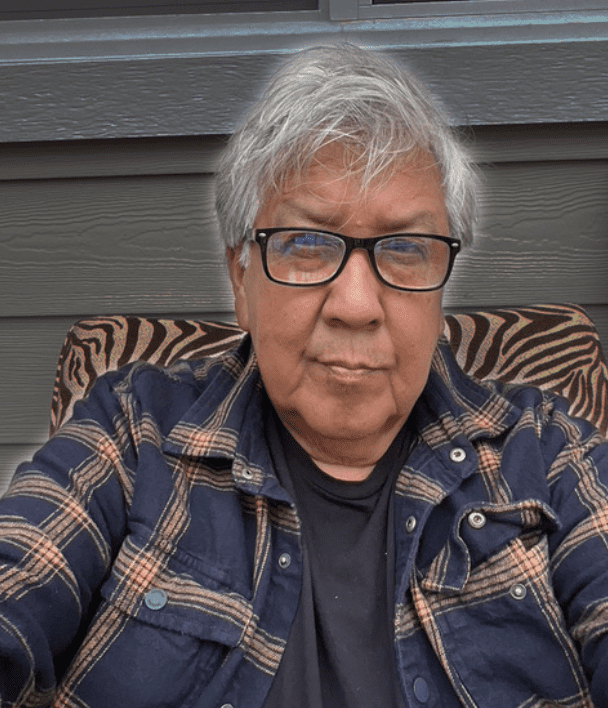
I am a Walostoqey man. born and raised in New Brunswick. I am in a common law relationship with a Haida woman and we moved here in 2015. I am honoured as an accepted community member. I don’t get to vote on Haida matters and I am good with that. In fact, I am in complete support of the Haida’s success at self-determination. And I am impressed that the Haida Gwaii News advocates the free expression of ideas and opinions. Here, like everywhere else, everything depends on everything else.