The Council of the Haida Nation (CHN) is pushing back against federal and provincial approval of the proposed Ksi Lisims LNG project, citing risks to Haida Title, rights, and territorial waters.
On Sept. 15, Canada and British Columbia announced their decision to greenlight the project, which would add an estimated 148 liquefied natural gas (LNG) tanker transits through Haida Territorial Waters each year.
CHN said it has not given consent for LNG or liquefied petroleum gas (LPG) shipments through Haida marine territory.
“CHN strongly opposes the Ksi Lisims LNG project and has not consented to any transport of LNG or LPG through Haida Territorial Waters,” the council said in a statement.
At the same time, CHN said it respects the Nisga’a Lisims Government’s right to self-determination, while remaining concerned about the project’s potential environmental, social, cultural, and economic effects.
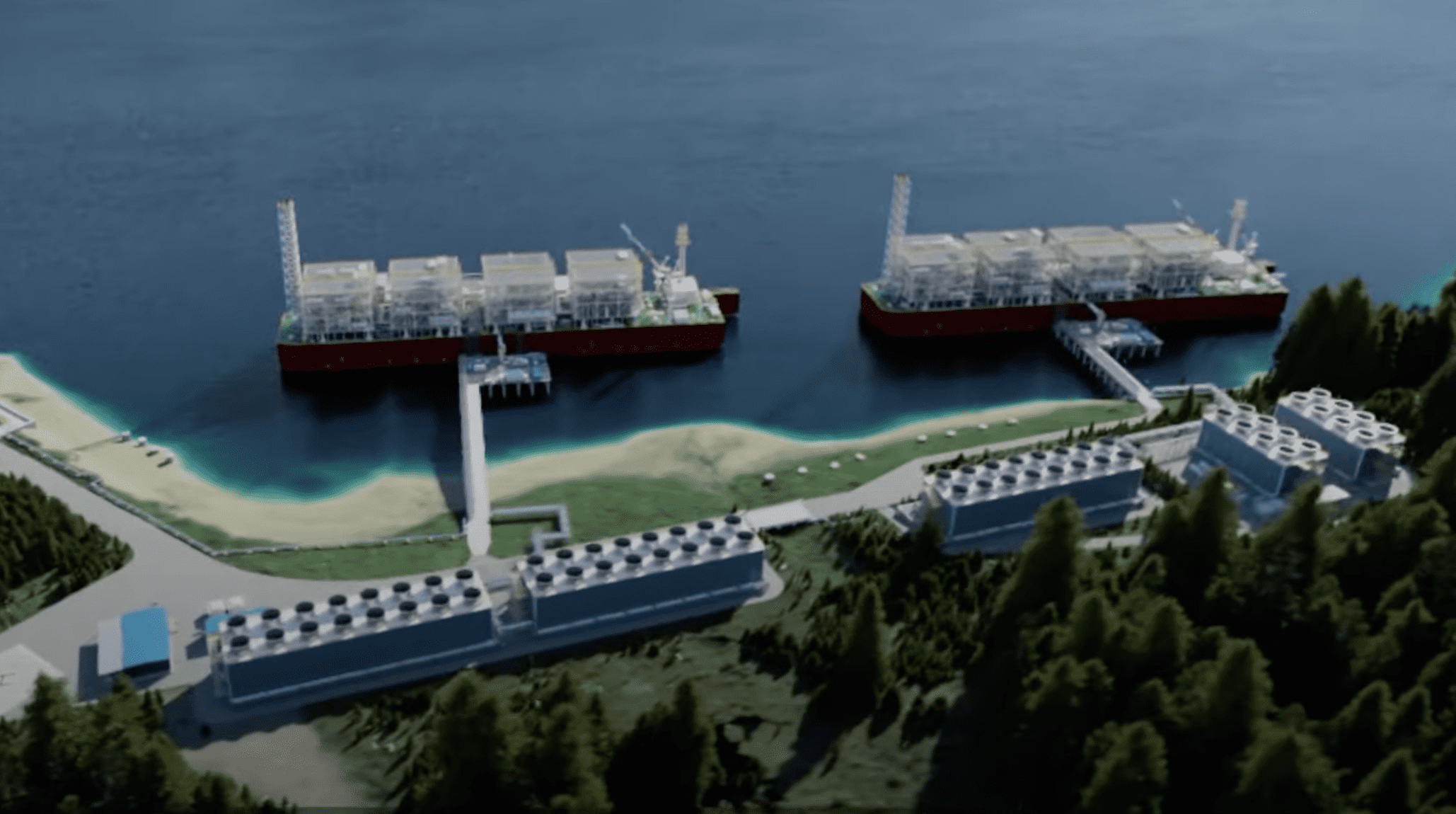
Ksi Lisims LNG is a proposed floating natural gas liquefaction and export facility near Ging̱olx on the Nass River estuary, within the modern treaty territory of the Nisga’a Nation. The project is being co-developed by the Nisga’a Lisims Government, Western LNG, and Rockies LNG.
Project partners say it is designed to be one of the lowest-emission LNG facilities in the world, powered by renewable hydroelectricity and built on floating platforms to reduce land impacts. The facility would have an export capacity of up to 12 million tonnes of LNG per year.
On Sept. 16, the project announced it had received both an Environmental Assessment Certificate from the B.C. government and a positive federal Decision Statement. Developers said the approvals demonstrate that Ksi Lisims LNG meets “the high standards of B.C., Canada, and the Nisga’a Nation, including environmental protection, Indigenous and public engagement, and community benefits.”
“This milestone reflects the strength of Indigenous leadership and our commitment to sustainable economic self-determination,” said Eva Clayton, President of Nisga’a Lisims Government, in the Sept. 16 Ksi Lisims LNG press release. “Ksi Lisims LNG represents a transformational opportunity for all participating B.C. nations, and it will be developed in line with our Nation’s high environmental standards.”
Propane exports out of Prince Rupert are already significant. According to the Prince Rupert Port Authority, the Ridley Island Propane Export Terminal shipped about 2.3 million tonnes of LPG in 2024, while Pembina’s Watson Island terminal handled roughly 500,000 tonnes. Together, that equals about 2.8 million tonnes of exports last year, or an estimated 60–75 tanker sailings through Dixon Entrance, based on standard vessel sizes.
These numbers do not include crude oil tankers, which are banned along the North Coast under the federal Oil Tanker Moratorium Act. Propane and LNG shipments are not covered by that law.
LNG exports have not yet started on the North Coast, meaning today’s tanker traffic is almost entirely propane carriers. Ksi Lisims LNG would mark a shift: the project is designed to produce about 12 million tonnes of LNG a year, and the proponents have acknowledged in their own filings that it will add to shipping traffic in northern waters.
CHN highlighted a range of risks tied to the project and the increase in vessel traffic. They point to the potential for damage to beaches and open water areas that support fishing and tourism, as well as more loitering in Siigée Gadsguusd McIntyre Bay. The Nation also raised concerns about a higher risk of whale strikes, greater noise impacts on fish and marine mammals, and added dangers in the shallow waters near Tsaan Kwaay Learmonth Bank and K’íis Gwaay Langara Island. They stressed the increased chance of environmental emergencies, including the catastrophic possibility of an LNG grounding or explosion.
The council also raised alarm about greenhouse gas emissions and Canada’s ability to meet climate targets, pointing to the impacts of gas extraction, distribution, and export.
A recent Clear Seas Centre for Responsible Shipping study found international vessel traffic between Canada and Asia is projected to jump 217 per cent by 2040, from 529 ships a year to 1,676. LNG and LPG tankers are expected to make up a significant share of that increase.
The project has been under discussion for years within Crown environmental assessment processes. CHN stressed that while Canada and B.C. have recognized Haida Title to all of Haida Gwaii “from the mountain tops to the low tide mark,” impact assessments for major projects are not part of the Nation’s co-governance arrangements.
While the Haida Nation was not a Participating Indigenous Nation in the provincial assessment, the ministers’ decision record cites a July 10, 2025, letter from CHN stating it does not consent to the project or related vessel traffic.
CHN said it continues to exercise Haida Title in marine territory, building its legal case and working through government-to-government tables to address shipping issues.
CHN is calling for stronger marine safety measures, including permanent Emergency Tow Vessels stationed on the North Coast to respond to shipping accidents. The council also emphasized its continued opposition to oil tankers, while supporting the federal North Coast Oil Tanker Moratorium Act.
“CHN will continue to work with Canada through our government-to-government tables, including the Reconciliation Framework Agreement for Bioregional Oceans Management and Protection, to find solutions to marine shipping issues,” the statement said.
Several other North Coast Nations were part of the provincial assessment process. Some, including Lax Kw’alaams, Metlakatla and Kitsumkalum, did not provide consent for the project. Gitanyow Hereditary Chiefs have openly opposed it in court, and Gitxaała did not submit a notice of consent. While the Nisg̱a’a Nation is leading the development and sees Ksi Lisims as an economic opportunity, other Nations remain opposed or cautious, citing risks to their territories, marine resources, and rights.