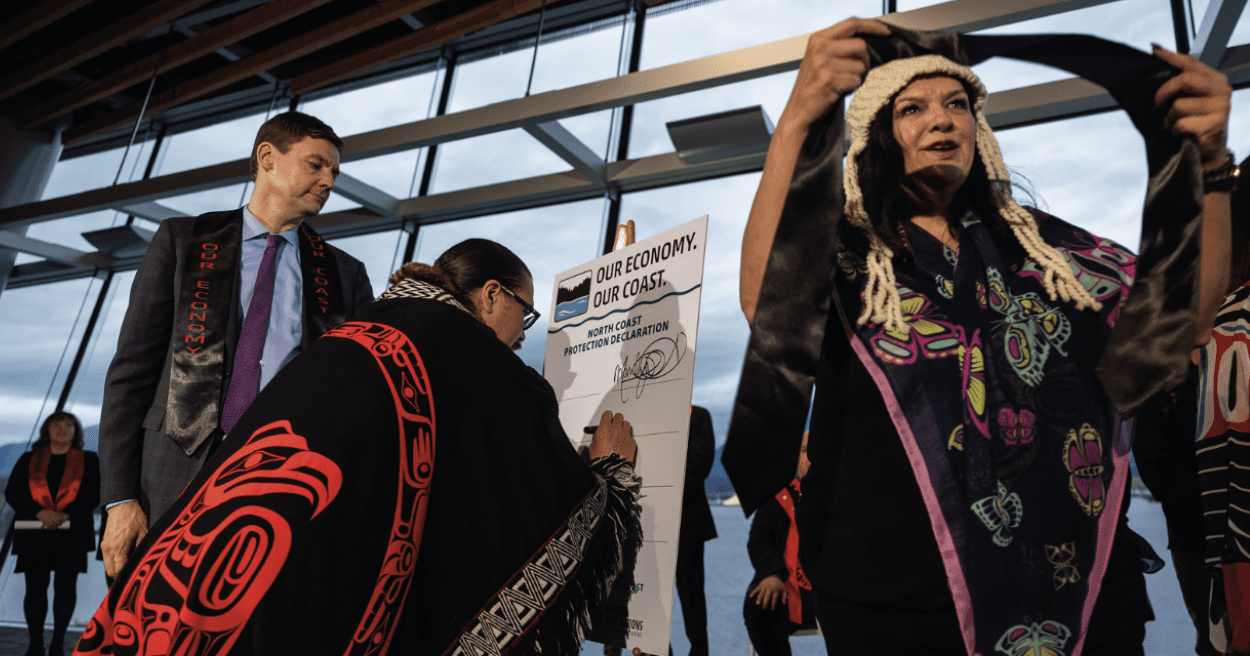
Haida Gwaii was represented at the signing table on November 5 as Gaagwiis Jason Alsop, President of the Council of the Haida Nation, joined North Coast Nations and the Province of British Columbia in issuing the North Coast Protection Declaration, urging the federal government to keep the Oil Tanker Moratorium Act intact.
The declaration, published through Coastal First Nations, calls for continued protection of one of the most ecologically and culturally significant marine regions in Canada. Haida leadership was present in the room as the declaration was signed, highlighting the importance of the moratorium to the waters surrounding Haida Gwaii.
The declaration describes the North Coast as the foundation of a conservation-based economy that relies on healthy marine ecosystems. Fisheries, tourism, renewable energy and stewardship programs are identified as key sectors within this regional economy, which Coastal First Nations describes as a multi-billion-dollar contributor supporting thousands of livelihoods.
Coastal First Nations points to the long-term outcomes of the Great Bear Rainforest agreements. Those agreements have created more than 1,400 permanent jobs and 140 new businesses. The organization reports that the conservation economy has generated nearly two billion dollars in value over the past 15 years through stewardship employment, business creation and community-driven development.
The Oil Tanker Moratorium Act became federal law in 2019. It restricts tankers carrying more than 12,500 metric tonnes of crude oil or persistent oil products from stopping, loading or unloading at ports along the northern coast. The moratorium area includes Haida Gwaii, Hecate Strait, Dixon Entrance and Queen Charlotte Sound. The Act outlines prohibited vessel activity, enforcement powers and penalties intended to prevent a major crude oil spill in these waters.
The legislation began as Bill C-48 and passed after debate in both the House of Commons and the Senate. The declaration notes that the moratorium did not create new protection, but formalized a commitment held by First Nations and coastal communities for more than 50 years. It argues that removing the moratorium would put regional projects at risk and could result in economic losses across the province. It also warns that a major crude oil spill would create long-lasting consequences for ecosystems and for the communities that depend on them.
The Haida Nation has a long history of opposing crude oil tanker traffic along the North Coast, a position documented in the Council of the Haida Nation’s marine planning and stewardship work. The participation of Gaagwiis at the signing reflected that long-standing stance and reaffirmed Haida Gwaii’s role in the broader regional effort to protect the coast.
North Coast–Haida Gwaii MLA Tamara Davidson attended the event and said the declaration reinforces the message that the tanker ban must remain in place to safeguard both the coast and the regional economy. She noted that the area includes some of the most ecologically and culturally rich marine environments in the country and expressed her support for the Nations and communities standing behind the declaration.
Transport Canada describes the waters covered by the moratorium as among the most sensitive marine environments in Canada, including habitat for salmon, seabirds, kelp forests and marine mammals.
The signing comes at a time when the moratorium is part of a wider national debate. Conservative Party leader Pierre Poilievre has pledged to overturn the Oil Tanker Moratorium Act if his party forms government. Other political figures have echoed calls for its removal, while coastal Nations and several environmental organizations have urged stronger protections. This political backdrop shapes the urgency of the declaration and its unified call to Ottawa.
The declaration invites individuals, communities and organizations to add their signatures in support of maintaining the moratorium. Coastal First Nations says the growing list of signatures shows the federal government that communities across British Columbia and Canada want the North Coast kept free of crude oil tanker traffic.